China is pressing European governments to boycott the ceremony awarding the Nobel Peace Prize to the Chinese dissident Liu Xiaobo, warning that the award interferes in China’s internal affairs and that Mr. Liu is a criminalThat's one reason why I'm not entirely afraid of China, because they are terrible members of the international community, and that stuff does matter. Just like in ordinary micro-economics, you may have the best product, but if people don't respect you, they will choose every excuse not to deal with you.
Showing posts with label China. Show all posts
Showing posts with label China. Show all posts
Friday, November 05, 2010
Do the Chinese Understand
That this makes the Nobel people look like they made the perfect choice?: "China Urges Europeans to Snub Nobel Ceremony":



Wednesday, December 02, 2009
America's Might
 Just a brief thought about American military might. I can't recall if I've written this recently, so forgive me for repeating myself...
The non-Styx Claim: I've read many people claim that the wars in Iraq and Afghanistan have emboldened our enemies because it demonstrates that the US is not all-powerful and that sustained guerrilla warfare will undermine the American resolve. The conclusion of these pundits is that the wars have weakened the culture of intimidation that the U.S. needs to maintain in order to scare the world into loving us. Or something like that.
The Styx Response: OK, here's the deal. We need to make a distinction between the way that idiots think and the way that our enemies/allies think. Idiots will believe propaganda, myths, and won't read newspapers. Generally speaking, idiots aren't powerful and don't run countries - this is especially true for autocracies whose leadership are often cruel, canny mobsters. Alas, it's possible that democracies can elect idiots - and this happened to us back in 2004 with Bush (because, it bears repeating, Bush lost the election in 2000, although because he got very close some could say that it matters - and, sadly, this *is* something I repeat over and over and never ask forgiveness despite my polite request at the beginning of this post).
So, yeah, GWBush and his ilk were idiots and did not actually pay attention to the real facts (e.g. they believed there were no difference between Shiites and Sunnis in Iraq). And this had real consequences. But generally this is not true and it's wise to behave as if the other countries of the world are led by people who endeavor to know real facts and to plan consequences accordingly. And, I'd posit, the more powerful the country, the more likely the leaders are to know the true facts.
OK, that's my ground-rule to analyzing the above claim about the current two wars.
My conclusion is that the wise, fact-loving countries still fear the United States' might, possibly at the same level they did before these two wars. Why?
(1) We still have enormous numbers of nuclear weapons and as such can destroy every country in the world. This is not the Styx getting all jingo on you and posturing for the mirror, this is part of how the other nations see us. We can destroy them all - many of them without a serious counter-strike.
(2) While #1 is known and cited, the next point is the same one but for conventional forces. I claimed here that the wars in Afghanistan and Iraq were botched, but I misspoke: the war part of those wars went well, it's the recovery and reconstruction that was botched. This is a big difference, especially if you are an enemy of the U.S. We had the power then, and have the power now, to utterly and unilaterally destroy a foreign government. If we as a nation weren't so moral as to be concerned with rebuilding, if all we wanted to do was destroy another nation, then our wars were successes!
Please remember that: from the standpoint of the Taliban and Saddam Hussein, they are no longer in power. And that matters a lot for our enemies. You can ask why we haven't done that more often (e.g. to Cuba, since the fall of the Soviet Union) and I assume it's to maintain the general ability of US military supremacy (which I define, in part, as our ability to act unilaterally).
So the botchedness is from the position of 'nation building' not fear and destruction - which is the whole argument of the above idiots.
 (3) While we are definitely hurting because of the two wars - all war is expensive - we haven't raised taxes nor called a draft. As such, from our enemies standpoint, we are running the wars rather easily. Unlike Vietnam, Korea, and especially WWII, these two wars have had comparatively little impact on everyday American lives. Yeah, you know that already, but just apply it logically to the above question: if we know it, other countries know it (because the knowledge is freely available). And even though our economy is in the dumps now, and while I think extricating from Iraq will help alleviate the dumpitude, the one didn't directly cause the other.
(4) Related to point #3 is that just as we are not sacrificing too much to run these wars, our enemies know that if we wanted to we could thus gear up to fight even more wars. Granted, most experts claim that we are at our military's limit right now. The Iraq surge before and the new Afghanistan surge have stretched us to the utmost. But that's within our volunteer-army sacrifice-less guidelines of no draft and no tax. I'm not denying the enormous sacrifices of our military - including the hapless sods who joined the guard many years ago and were thrust by Bush-Cheney into unagreed commitments and stop-loss madness. All true.
But the country hasn't sacrificed for the two wars because Bush-Cheney were trying to steal them. They didn't want us to question how and why the wars were being fought. We were sold lies about Iraq and 9/11, and since we didn't have to pay up front, Congress and the GOP were able to ignore the consequences. This is why the wars are so hated now: because the lies have been exposed.
But were we to face a true existential threat then that would change. So, quiz, based on what I've said above: if the American people were convinced that the only way to stop Iran from becoming a rogue nuclear state hell-bent on destroying America with nukes, then would we be able to fight that third war?
First of all, I need to deal with the cynics who would say: the American people won't believe the threat because of the lies of Cheney and Iraq.
The Styx says: if the threat were credibly stated, and if it were real, then our government would be able to prove the claim without the smoke and mirrors Bush needed to employ to dupe Congress/the Press. So for the purpose of this quiz, the threat is credible and believed.
So the idiots would say: we cannot fight a third war because we're stretched thin!
The Styx would say: of course we could fight a third war. We fought World War II in three major theaters (1. Europe (North Africa to Italy to France), 2. Pacific (Australia to Indonesia to Philippines to Japan), 3. India-China-Burma). We did so because of a draft and rationing at home. And we can do so again if existentially threatened.
 Last point: many wags try to compare the current U.S. position/empire to the Romans or the UK. I'd refute the comparisons with two facts: the US is both an isolated island 'empire' (like UK) but with a huge land-size and natural resources. We run contiguously from coast-to-coast. Our borders are with a wussy frozen North and a chaotic developing nation to the South. Running an empire from England was always a stretch because they lacked the internal national resources to conduct their wars; the same for Rome, except they had major border issues as well. We don't. More anon if needed.
To review/conclude: our allies know that we're still the strongest around. Our enemies, because they're run (usually) by intelligent fact-loving despots who want to maintain a hold on their seized wealth, also know that. Our paramount strength has not been undermined by our two wars because (a) we still have the most nukes, (b) we have shown we can act unilaterally and while we may botch nation building we're awesome at government destruction, (c) we're running our wars without a draft or raised taxes, and (d) if we wanted to tax and draft, we'd be even more destructive.
First pic from here, second from here, third pic from the Wiki.
Monday, March 16, 2009
Steve Greenberg and Conservadox
 One of the topics which I hope to spend more time researching (and publishing) is that of the denominations in Judaism. I am especially interested in the new formation of 'non-denominational' or 'trans-d' or 'post-d' (especially paired with the new 'partnership minyans') because these people, I claim, are basically conservative Jews who don't want to admit it.
Either they grew up Conservative and don't identify with them anymore - either because C is too liberal, too wishy-washy, too materialist, or what have you. I don't know too well because I haven't interviewed these people, but that's my assumption.
The ones I do know, who do belong to Partnership Minyans, are liberal Orthodox Jews who were taught Torah and Halakha but not about the philosophy of the halakhic process and were basically Conservative Jews for years without even knowing it.
No matter what they call themselves (trans, post, non) I still think of them as Conservadox: and by that I mean that they have the ideology of Conservative - which includes the conception of the halakhic process as constantly mutating and mutable - but with the basic practice of ignorant (Modern) Orthodox.
The ignorance is an important component; because while there are ignoramuses in both Modern and Charedi Orthodox, the ignorant Charedi does not have another system to fall back on to fill up the lacunae of knowledge: when they don't know what to do, or why they do what they do, they fall back on either superstition, minhag, or the combination of the two (what I label "tabloid halakha").
Ignorant Modern Orthodox fill in their gaps of knowledge with modern culture which makes them think like 21st Century Americans; which also fits in very well for whatever passes for Conservative halakha at this time.
The biggest aspect of the Orthodox born conservadox - again the people I'm most familiar with, so it could be for the whole group - is a bigotry against being called Conservative. They hate the label and will do whatever they can to still be called either 'Orthodox' or at least not-conservative.
Part of the bigotry comes from plain ignorance: they don't know what the terms mean; but related to that is the main impetus: when these people grew up, in their home cultures, being Orthodox was 'good' (authentic, real, valued) and Conservative was 'bad' (fake, invented, unauthentic). And to these labels they cling.
I have had many conversations with these people where I have to assure them, repeatedly, that being Conservative is OK if that's what they are. I emphasize that being honest in what you are, and what you believe, is important to yourself and to others. This is especially important for rabbis (see below).
The motto of Conservadox is "where there's a rabbinic will, there's a halakhic way." This motto, invented by Blu Greenberg (On Women and Judaism (JPS 1981) p.44 sez this), is the whole denomination in a nutshell. Blu herself is classic conservadox (her husband is more like Doobie-dox or who knows).
If you believe the truth of that statement then:
- You are ignorant of the halakhic process - get up right now and rush into a yeshiva and start learning
- You are on notice for being Conservadox
- Which I think is fine as long as you're honest about it
 Steve Greenberg
What does this have to do with Steve "The Gay Orthodox Rabbi" Greenberg? Well, this morning I had a discussion with my bar-plugta about him because he was the guest rabbi in Brandeis over Shabbas.
Side note: my bar-plugta (an Aramaic term, from the Gemara, meaning a sparring partner in learning) is the driver of my daily car-pool. That's the basis of the name I'm giving her in this blog as well: Bat-Plugta.
Anyway, Bat Plugta is a very spiritual, and religiously knowledgeable person, who nonetheless holds the diametrically opposite view on almost everything from what I have. We even disagreed about whether we like fast days (she does, I don't). She's conservadox with a capital D - e.g. she puts on tallis and tefillin - yet she is under the impression that she's comfortably within the Orthodox definition. Even though she admits that David Weiss-Halivni is her posek.
Anyway, she went to hear Steve Greenberg and was gushing over his perspective on halakha. While normally I bite my tongue when conversing with benefactors (the carpool is very helpful and I'll ride with a J4J if it shaves 2 hours off my commute), but I needed to put my foot down about Steve.
Basically, I stated, that while I sympathize with Greenberg's plight - the closet is hell - I repudiate his fundamental dishonesty about halakha. Like many gay clergymen, he tries to find a way that being gay and 'frum' is OK. It is not; that is pretty much fundamental. Yet in his machinations and contortions to make being gay A-OK he ends up following the 'progressive halakha' methodology of Conservative halakha.
Which means that when he calls himself an Orthodox Rabbi, he's lying. Bat Plugta, in arguing with me, claiming Steve's still an Orthodox Rabbi, brought up all the bad proofs I fear (including 'rabbinic will, halakhic way.') She also brought proofs of his Orthodoxy from rabbis that, alas, are on the cusp of being booted from the definition. But, critically, she said that Greenberg claimed that he doesn't like 'labels' and that he doesn't need to embrace being 'Orthodox' while at the same time she said he said (and now I'm saying) that he doesn't identify as 'conservative' either.
Well bully for him. Sadly, Steve seems to have stepped from one closet into another: and that's what Conservadox is, it's a closeted conservative trying to pass as Orthodox.
Note, you can be Orthodox and gay. Either you are celibate - which means a life of righteous self-torture - or you are a lifelong compelled sinner. I have compassion for those who are compelled, through uncontrollable urges, to sin. They fall under a specific category of "mumar l'teyavon" (sinners of appetite) and can be trusted in halakha for many things. It's a sad life - it would be unconscionable for me to deny the difficulty - but it's honest, and as halakhic as possible.
Jewish law about homosexuality, as opposed to other modern prohibitions (like women's learning etc), is consistent: halakha severely limits sex. It's clear. And halakha is pretty much anti-compassion when it comes to violating Torah prohibitions. If you think not, then you need to learn more. If that's not the kind of Judaism you like, then, again, either learn more, or find another Judaism - just don't call it Orthodox; it's dishonest.
The last word, for now, on this huge troubling concept: what I'm very worried about is how examples from Modern Orthodoxy of halakha that *has* progressed - e.g. women's learning, Zionism, secular learning - are being used by these deluded sinners to substantiate their attempts to step beyond the line. I'm worried because, when push comes to shove, allowing women to learn Gemara should not lead people to believe that homosexuality is mutar. And if the connection is made too often, then Modern Orthodoxy will die: it'll be a horrible sacrifice to jettison women's learning in order to persist in forbidding homosexuality, but it will be a sacrifice that the Orthodox leadership will make.
Thursday, June 05, 2008
Obama's Remarks at AIPAC Policy Conference
 From RealClearPolitics: June 04, 2008
Obama's Remarks at AIPAC Policy Conference
Remarks at AIPAC Policy Conference
June 4, 2008
As Prepared for Delivery
It's great to see so many friends from across the country. I want to congratulate Howard Friedman, David Victor and Howard Kohr on a successful conference, and on the completion of a new headquarters just a few blocks away.Backpost finished 2009-12-06.
Before I begin, I want to say that I know some provocative emails have been circulating throughout Jewish communities across the country. A few of you may have gotten them. They're filled with tall tales and dire warnings about a certain candidate for President. And all I want to say is - let me know if you see this guy named Barack Obama, because he sounds pretty frightening.
But if anyone has been confused by these emails, I want you to know that today I'll be speaking from my heart, and as a true friend of Israel. And I know that when I visit with AIPAC, I am among friends. Good friends. Friends who share my strong commitment to make sure that the bond between the United States and Israel is unbreakable today, tomorrow, and forever.
One of the many things that I admire about AIPAC is that you fight for this common cause from the bottom up. The lifeblood of AIPAC is here in this room - grassroots activists of all ages, from all parts of the country, who come to Washington year after year to make your voices heard. Nothing reflects the face of AIPAC more than the 1,200 students who have travelled here to make it clear to the world that the bond between Israel and the United States is rooted in more than our shared national interests - it's rooted in the shared values and shared stories of our people. And as President, I will work with you to ensure that it this bond strengthened.
I first became familiar with the story of Israel when I was eleven years old. I learned of the long journey and steady determination of the Jewish people to preserve their identity through faith, family and culture. Year after year, century after century, Jews carried on their traditions, and their dream of a homeland, in the face of impossible odds.
The story made a powerful impression on me. I had grown up without a sense of roots. My father was black, he was from Kenya, and he left us when I was two. My mother was white, she was from Kansas, and I'd moved with her to Indonesia and then back to Hawaii. In many ways, I didn't know where I came from. So I was drawn to the belief that you could sustain a spiritual, emotional and cultural identity. And I deeply understood the Zionist idea - that there is always a homeland at the center of our story.
I also learned about the horror of the Holocaust, and the terrible urgency it brought to the journey home to Israel. For much of my childhood, I lived with my grandparents. My grandfather had served in World War II, and so had my great uncle. He was a Kansas boy, who probably never expected to see Europe - let alone the horrors that awaited him there. And for months after he came home from Germany, he remained in a state of shock, alone with the painful memories that wouldn't leave his head.
You see, my great uncle had been a part of the 89th Infantry Division - the first Americans to reach a Nazi concentration camp. They liberated Ohrdruf, part of Buchenwald, on an April day in 1945. The horrors of that camp go beyond our capacity to imagine. Tens of thousands died of hunger, torture, disease, or plain murder - part of the Nazi killing machine that killed 6 million people.
When the Americans marched in, they discovered huge piles of dead bodies and starving survivors. General Eisenhower ordered Germans from the nearby town to tour the camp, so they could see what was being done in their name. He ordered American troops to tour the camp, so they could see the evil they were fighting against. He invited Congressmen and journalists to bear witness. And he ordered that photographs and films be made. Explaining his actions, Eisenhower said that he wanted to produce, "first-hand evidence of these things, if ever, in the future, there develops a tendency to charge these allegations merely to propaganda."
I saw some of those very images at Yad Vashem, and they never leave you. And those images just hint at the stories that survivors of the Shoah carried with them. Like Eisenhower, each of us bears witness to anyone and everyone who would deny these unspeakable crimes, or ever speak of repeating them. We must mean what we say when we speak the words: "never again."
It was just a few years after the liberation of the camps that David Ben-Gurion declared the founding of the Jewish State of Israel. We know that the establishment of Israel was just and necessary, rooted in centuries of struggle, and decades of patient work. But 60 years later, we know that we cannot relent, we cannot yield, and as President I will never compromise when it comes to Israel's security.
Not when there are still voices that deny the Holocaust. Not when there are terrorist groups and political leaders committed to Israel's destruction. Not when there are maps across the Middle East that don't even acknowledge Israel's existence, and government-funded textbooks filled with hatred toward Jews. Not when there are rockets raining down on Sderot, and Israeli children have to take a deep breath and summon uncommon courage every time they board a bus or walk to school.
I have long understood Israel's quest for peace and need for security. But never more so than during my travels there two years ago. Flying in an IDF helicopter, I saw a narrow and beautiful strip of land nestled against the Mediterranean. On the ground, I met a family who saw their house destroyed by a Katyusha Rocket. I spoke to Israeli troops who faced daily threats as they maintained security near the blue line. I talked to people who wanted nothing more simple, or elusive, than a secure future for their children.
I have been proud to be a part of a strong, bi-partisan consensus that has stood by Israel in the face of all threats. That is a commitment that both John McCain and I share, because support for Israel in this country goes beyond party. But part of our commitment must be speaking up when Israel's security is at risk, and I don't think any of us can be satisfied that America's recent foreign policy has made Israel more secure.
Hamas now controls Gaza. Hizbollah has tightened its grip on southern Lebanon, and is flexing its muscles in Beirut. Because of the war in Iraq, Iran - which always posed a greater threat to Israel than Iraq - is emboldened, and poses the greatest strategic challenge to the United States and Israel in the Middle East in a generation. Iraq is unstable, and al Qaeda has stepped up its recruitment. Israel's quest for peace with its neighbors has stalled, despite the heavy burdens borne by the Israeli people. And America is more isolated in the region, reducing our strength and jeopardizing Israel's safety.
The question is how to move forward. There are those who would continue and intensify this failed status quo, ignoring eight years of accumulated evidence that our foreign policy is dangerously flawed. And then there are those who would lay all of the problems of the Middle East at the doorstep of Israel and its supporters, as if the Israeli-Palestinian conflict is the root of all trouble in the region. These voices blame the Middle East's only democracy for the region's extremism. They offer the false promise that abandoning a stalwart ally is somehow the path to strength. It is not, it never has been, and it never will be.
Our alliance is based on shared interests and shared values. Those who threaten Israel threaten us. Israel has always faced these threats on the front lines. And I will bring to the White House an unshakeable commitment to Israel's security.
That starts with ensuring Israel's qualitative military advantage. I will ensure that Israel can defend itself from any threat - from Gaza to Tehran. Defense cooperation between the United States and Israel is a model of success, and must be deepened. As President, I will implement a Memorandum of Understanding that provides $30 billion in assistance to Israel over the next decade - investments to Israel's security that will not be tied to any other nation. First, we must approve the foreign aid request for 2009. Going forward, we can enhance our cooperation on missile defense. We should export military equipment to our ally Israel under the same guidelines as NATO. And I will always stand up for Israel's right to defend itself in the United Nations and around the world.
Across the political spectrum, Israelis understand that real security can only come through lasting peace. And that is why we - as friends of Israel - must resolve to do all we can to help Israel and its neighbors to achieve it. Because a secure, lasting peace is in Israel's national interest. It is in America's national interest. And it is in the interest of the Palestinian people and the Arab world. As President, I will work to help Israel achieve the goal of two states, a Jewish state of Israel and a Palestinian state, living side by side in peace and security. And I won't wait until the waning days of my presidency. I will take an active role, and make a personal commitment to do all I can to advance the cause of peace from the start of my Administration.
The long road to peace requires Palestinian partners committed to making the journey. We must isolate Hamas unless and until they renounce terrorism, recognize Israel's right to exist, and abide by past agreements. There is no room at the negotiating table for terrorist organizations. That is why I opposed holding elections in 2006 with Hamas on the ballot. The Israelis and the Palestinian Authority warned us at the time against holding these elections. But this Administration pressed ahead, and the result is a Gaza controlled by Hamas, with rockets raining down on Israel.
The Palestinian people must understand that progress will not come through the false prophets of extremism or the corrupt use of foreign aid. The United States and the international community must stand by Palestinians who are committed to cracking down on terror and carrying the burden of peacemaking. I will strongly urge Arab governments to take steps to normalize relations with Israel, and to fulfill their responsibility to pressure extremists and provide real support for President Abbas and Prime Minister Fayyad. Egypt must cut off the smuggling of weapons into Gaza. Israel can also advance the cause of peace by taking appropriate steps - consistent with its security - to ease the freedom of movement for Palestinians, improve economic conditions in the West Bank, and to refrain from building new settlements - as it agreed to with the Bush Administration at Annapolis.
Let me be clear. Israel's security is sacrosanct. It is non-negotiable. The Palestinians need a state that is contiguous and cohesive, and that allows them to prosper - but any agreement with the Palestinian people must preserve Israel's identity as a Jewish state, with secure, recognized and defensible borders. Jerusalem will remain the capital of Israel, and it must remain undivided.
I have no illusions that this will be easy. It will require difficult decisions on both sides. But Israel is strong enough to achieve peace, if it has partners who are committed to the goal. Most Israelis and Palestinians want peace, and we must strengthen their hand. The United States must be a strong and consistent partner in this process - not to force concessions, but to help committed partners avoid stalemate and the kind of vacuums that are filled by violence. That's what I commit to do as President of the United States.
The threats to Israel start close to home, but they don't end there. Syria continues its support for terror and meddling in Lebanon. And Syria has taken dangerous steps in pursuit of weapons of mass destruction, which is why Israeli action was justified to end that threat.
I also believe that the United States has a responsibility to support Israel's efforts to renew peace talks with the Syrians. We must never force Israel to the negotiating table, but neither should we ever block negotiations when Israel's leaders decide that they may serve Israeli interests. As President, I will do whatever I can to help Israel succeed in these negotiations. And success will require the full enforcement of Security Council Resolution 1701 in Lebanon, and a stop to Syria's support for terror. It is time for this reckless behavior to come to an end.
There is no greater threat to Israel - or to the peace and stability of the region - than Iran. Now this audience is made up of both Republicans and Democrats, and the enemies of Israel should have no doubt that, regardless of party, Americans stand shoulder-to-shoulder in our commitment to Israel's security. So while I don't want to strike too partisan a note here today, I do want to address some willful mischaracterizations of my positions.
The Iranian regime supports violent extremists and challenges us across the region. It pursues a nuclear capability that could spark a dangerous arms race, and raise the prospect of a transfer of nuclear know-how to terrorists. Its President denies the Holocaust and threatens to wipe Israel off the map. The danger from Iran is grave, it is real, and my goal will be to eliminate this threat.
But just as we are clear-eyed about the threat, we must be clear about the failure of today's policy. We knew, in 2002, that Iran supported terrorism. We knew Iran had an illicit nuclear program. We knew Iran posed a grave threat to Israel. But instead of pursuing a strategy to address this threat, we ignored it and instead invaded and occupied Iraq. When I opposed the war, I warned that it would fan the flames of extremism in the Middle East. That is precisely what happened in Iran - the hardliners tightened their grip, and Mahmoud Ahmadinejad was elected President in 2005. And the United States and Israel are less secure.
I respect Senator McCain, and look forward to a substantive debate with him these next five months. But on this point, we have differed, and we will differ. Senator McCain refuses to understand or acknowledge the failure of the policy that he would continue. He criticizes my willingness to use strong diplomacy, but offers only an alternate reality - one where the war in Iraq has somehow put Iran on its heels. The truth is the opposite. Iran has strengthened its position. Iran is now enriching uranium, and has reportedly stockpiled 150 kilos of low enriched uranium. Its support for terrorism and threats toward Israel have increased. Those are the facts, they cannot be denied, and I refuse to continue a policy that has made the United States and Israel less secure.
Senator McCain offers a false choice: stay the course in Iraq, or cede the region to Iran. I reject this logic because there is a better way. Keeping all of our troops tied down indefinitely in Iraq is not the way to weaken Iran - it is precisely what has strengthened it. It is a policy for staying, not a plan for victory. I have proposed a responsible, phased redeployment of our troops from Iraq. We will get out as carefully as we were careless getting in. We will finally pressure Iraq's leaders to take meaningful responsibility for their own future.
We will also use all elements of American power to pressure Iran. I will do everything in my power to prevent Iran from obtaining a nuclear weapon. That starts with aggressive, principled diplomacy without self-defeating preconditions, but with a clear-eyed understanding of our interests. We have no time to waste. We cannot unconditionally rule out an approach that could prevent Iran from obtaining a nuclear weapon. We have tried limited, piecemeal talks while we outsource the sustained work to our European allies. It is time for the United States to lead.
There will be careful preparation. We will open up lines of communication, build an agenda, coordinate closely with our allies, and evaluate the potential for progress. Contrary to the claims of some, I have no interest in sitting down with our adversaries just for the sake of talking. But as President of the United States, I would be willing to lead tough and principled diplomacy with the appropriate Iranian leader at a time and place of my choosing - if, and only if - it can advance the interests of the United States.
Only recently have some come to think that diplomacy by definition cannot be tough. They forget the example of Truman, and Kennedy and Reagan. These Presidents understood that diplomacy backed by real leverage was a fundamental tool of statecraft. And it is time to once again make American diplomacy a tool to succeed, not just a means of containing failure. We will pursue this diplomacy with no illusions about the Iranian regime. Instead, we will present a clear choice. If you abandon your dangerous nuclear program, support for terror, and threats to Israel, there will be meaningful incentives - including the lifting of sanctions, and political and economic integration with the international community. If you refuse, we will ratchet up the pressure.
My presidency will strengthen our hand as we restore our standing. Our willingness to pursue diplomacy will make it easier to mobilize others to join our cause. If Iran fails to change course when presented with this choice by the United States, it will be clear - to the people of Iran, and to the world - that the Iranian regime is the author of its own isolation. That will strengthen our hand with Russia and China as we insist on stronger sanctions in the Security Council. And we should work with Europe, Japan and the Gulf states to find every avenue outside the UN to isolate the Iranian regime - from cutting off loan guarantees and expanding financial sanctions, to banning the export of refined petroleum to Iran, to boycotting firms associated with the Iranian Revolutionary Guard, whose Quds force has rightly been labeled a terrorist organization.
I was interested to see Senator McCain propose divestment as a source of leverage - not the bigoted divestment that has sought to punish Israeli scientists and academics, but divestment targeted at the Iranian regime. It's a good concept, but not a new one. I introduced legislation over a year ago that would encourage states and the private sector to divest from companies that do business in Iran. This bill has bipartisan support, but for reasons that I'll let him explain, Senator McCain never signed on. Meanwhile, an anonymous Senator is blocking the bill. It is time to pass this into law so that we can tighten the squeeze on the Iranian regime. We should also pursue other unilateral sanctions that target Iranian banks and assets.
And we must free ourselves from the tyranny of oil. The price of a barrel of oil is one of the most dangerous weapons in the world. Petrodollars pay for weapons that kill American troops and Israeli citizens. And the Bush Administration's policies have driven up the price of oil, while its energy policy has made us more dependent on foreign oil and gas. It's time for the United States to take real steps to end our addiction to oil. And we can join with Israel, building on last year's US-Israel Energy Cooperation Act, to deepen our partnership in developing alternative sources of energy by increasing scientific collaboration and joint research and development. The surest way to increase our leverage in the long term is to stop bankrolling the Iranian regime.
Finally, let there be no doubt: I will always keep the threat of military action on the table to defend our security and our ally Israel. Sometimes there are no alternatives to confrontation. But that only makes diplomacy more important. If we must use military force, we are more likely to succeed, and will have far greater support at home and abroad, if we have exhausted our diplomatic efforts.
That is the change we need in our foreign policy. Change that restores American power and influence. Change accompanied by a pledge that I will make known to allies and adversaries alike: that America maintains an unwavering friendship with Israel, and an unshakeable commitment to its security.
As members of AIPAC, you have helped advance this bipartisan consensus to support and defend our ally Israel. And I am sure that today on Capitol Hill you will be meeting with members of Congress and spreading the word. But we are here because of more than policy. We are here because the values we hold dear are deeply embedded in the story of Israel.
Just look at what Israel has accomplished in 60 years. From decades of struggle and the terrible wake of the Holocaust, a nation was forged to provide a home for Jews from all corners of the world - from Syria to Ethiopia to the Soviet Union. In the face of constant threats, Israel has triumphed. In the face of constant peril, Israel has prospered. In a state of constant insecurity, Israel has maintained a vibrant and open discourse, and a resilient commitment to the rule of law.
As any Israeli will tell you, Israel is not a perfect place, but like the United States it sets an example for all when it seeks a more perfect future. These same qualities can be found among American Jews. It is why so many Jewish Americans have stood by Israel, while advancing the American story. Because there is a commitment embedded in the Jewish faith and tradition: to freedom and fairness; to social justice and equal opportunity. To tikkun olam - the obligation to repair this world.
I will never forget that I would not be standing here today if it weren't for that commitment. In the great social movements in our country's history, Jewish and African Americans have stood shoulder to shoulder. They took buses down south together. They marched together. They bled together. And Jewish Americans like Andrew Goodman and Michael Schwerner were willing to die alongside a black man - James Chaney - on behalf of freedom and equality.
Their legacy is our inheritance. We must not allow the relationship between Jews and African Americans to suffer. This is a bond that must be strengthened. Together, we can rededicate ourselves to end prejudice and combat hatred in all of its forms. Together, we can renew our commitment to justice. Together, we can join our voices together, and in doing so make even the mightiest of walls fall down.
That work must include our shared commitment to Israel. You and I know that we must do more than stand still. Now is the time to be vigilant in facing down every foe, just as we move forward in seeking a future of peace for the children of Israel, and for all children. Now is the time to stand by Israel as it writes the next chapter in its extraordinary journey. Now is the time to join together in the work of repairing this world.
Barack Obama is a Democratic Senator from Illinois and a candidate for the Democratic presidential nomination.
Wednesday, March 05, 2008
Fallows: Clinton, Obama, and the OODA loop

James Fallows, an Atlantic blogger, is one of the reasons why I subscribed to the dead-tree magazine. While very young, he was a speechwriter for HGM Carter - but I don't hold that against him. He's currently in China and has been many other places in his reportery career. He's also, and I say this with actual respect, very goyish (which means that he has many friends in the military and the business world, has traveled all over and is a pilot - many things that I can't/don't have/do because of my non-goyishness). He knows a lot about politics and speeches, so his political analysis in the primary is instructive. I just wish he could post more often.
If you've heard anything about the OODA Loop, it's because of Fallows. Read this excellent take on the current battle between Obama and Hillary (it's brilliant because, as usual, he's saying things that I've been saying. I admit that, so sue me): More on Clinton, Obama, and the OODA loop, James Fallows (March 05, 2008), with this especially important bellow:
In a live CNN interview just now, Sen. Clinton repeated, twice, the "Sen. McCain has a lifetime of experience, I have a lifetime of experience, Sen. Obama has one speech in 2002" line. By what logic, exactly, does a member of the Democratic party include the "Sen. McCain has a lifetime of experience" part of that sentence? And I guess with her nonstop references to 2002 she must be talking about Obama's anti-Iraq war speech, not the 2004 convention speech that actually put him on the map.)Fallows asks implicitly what I will say explicitly: will Hillary come to her senses, and even if she does, has she gone too far to be accepted by the party again?
I have reached the point of wanting to scream every time I hear about the primacy of "experience," knowing how skillfully the 46-year old Bill Clinton waved that argument away when it was used against him 16 years ago by a sitting President who simply dwarfed him in high-level experience.* But to pose it in a form that is poison for the party should Obama be the nominee??? To produce a clip that the McCain campaign could run unedited every single day of a campaign against Obama? That is something special. (Also, I think she means 2004 for the speech.) If Bill Clinton poisoned the well for other possible Democratic nominees in quite the same way back in 1992, I can't think of it now.
The conclusion of Spinney's (and Gerson's) analysis was that Obama had put Hillary Clinton into a position where in order to win, she had to damage not just him but the party. That is why, as everyone is saying, the big victor today is John McCain, and not just in the obvious way.
Pic from here. Backpost finished 2009-11-29.
Friday, August 10, 2007
Block Picture Game
 Like any good cheapskate, I enjoy off-beat mail order catalogues. The big mama of the recent catalog craze is Harriet Carter. My wife will, until my dying day tell the story of how I purchased the toilet-paper tube tower from HC. Ya see, it looked pretty good in the catalog, and one of the worst human fears (as categorized by Carl Jung in 1912) is the Fear of Running Out of Toilet Paper. The tower, as I figured it, would provide a stopgap of toilet paper in the event of a sudden empty roll. I'd link to the item in question, but thankfully they no longer make it. When it arrived in the mail, we saw that it was a cheap piece of wobbily plastic that was actually too small in diameter to fit an ordinary roll of toilet paper. Hence why I will never live that item down.
Ahem. Now, even after that disaster, whose lesson I affirmed to learn from well, I decided that while they may botch up bathroom accessories surely Harriet could be trusted when it comes to children's toys! Hence, my purchase of The Personalized Letter Blocks.
Note that this actually turned out to be a pretty good gift. The picture of the gift, is pretty accurate. And my son enjoys them. However, only four of the surfaces have shiny color letters. Another two surfaces have letters etched onto the wood (in 'black and white' as it were). And the last two surfaces have whimsical child-friendly pictures of items that children like. Like cars, or boats, or birds.
However, a few of the pictures are completely goofy. I have no idea what the pictures are to represent. First of all, after the blocks arrived, I discovered that they were manufactured in China. Naturally this means that we have since disposed of them along with any other brightly colored toy from China in our possession (which means our kids play with the only things that are left: dried up food).
So in puzzling out the meaning of these mysterious glyphs, I hypothesize that they must represent playful items that a Chinese slave laborer would imagine an American child would find interesting. You take a look and tell me what you think these are.

Best Guesses:
1. Flower (sorry, it's upside down; note, I think it's a Chrysanthemum)
2. Boat (festooned with military equipment)
3. Duck (OK)
4. Candles (why?)
OK, those were relatively normal. Now try these:

Best Guesses:
1. hovercraft? monorail? electric shaver?
2. ski-lift? Roosevelt Island?
3. trained seal swallowing a dodgeball?
4. a small house with a big chimney? a bong?
Have fun.
Backpost began 4/18/07 and finished 8/10/07, but I really should just label all backposts April 20. Anyway, I just had the pictures.
Tuesday, July 31, 2007
Best Movie Lines Ever
Andrew Sullivan is compiling a list of nominations for "Best. Movie. Line. Ever." - putting up an embedded YouTube clip and the line recommendation. After all the nominations are in, the readers will get to vote. Some of the suggestions are pretty staid (e.g. "Plastics" from The Graduate; yawn).
Here's the list I sent him this morning with some of my recommendations:
1. The first intro to Bond (Dr. No).
2. Big Trouble in Little China:
In retrospect, many are funny mainly in context, but as an unrepentant Fletchophile, I cannot but offer them
[end letter]
We'll see how many he posts/accepts.
{2009 Update: He used none of them. Boor.}
Here's the list I sent him this morning with some of my recommendations:
1. The first intro to Bond (Dr. No).
- JB: "I admire your courage, Miss...?"
ST: "Trench. Syliva Trench. I admire your luck Mr...."
JB: "Bond. James Bond."
2. Big Trouble in Little China:
- "It's all in the reflexes" (At 1:53 at above clip.)
- "Son of a b*tch must pay"
- "I was born ready"
- My favorite line (and my life's motto): "Hey, I'm a reasonable guy. But I've just experienced some very unreasonable things."
- Also, check out his odd project, some dude bothered to make a South Park version:
part 1, part 2, part 3
- "Well, hello Mr. Fancy Pants. I got news for you pal, you ain't leading but two things right now: Jack and S**t. And Jack left town."
- "All right you primitive screwheads listen up. See this? This. Is. My. BOOMSTICK."
- "First you want to kill me, now you want to kiss me? [Spits grape pit] Blow."
- "It's a trick. Get an axe"
- "Yo, she-b*tch [loads rifle] Let's go"
- "Groovy"
- "Good, bad, I'm the guy with the gun".
- The whole end scene, but here are the choice lines:
- Demon: "Who the hell are you?"
Ash: "Names Ash. [cocks rifle] Housewares." - Demon: "I'll swallow your soul!"
Ash: "Come get some." - "Hail to the King Baby"
- Demon: "Who the hell are you?"
- "can I borrow your towel for a second, my car just hit a water buffalo"
- them: "Muchas Gracias!"
Fletch: "Tierra del Fuego" - "There's been a lot of changes in the law"
- 8:48: "The coroner had certified Stanwyk as dead... or extremely sleepy"
In retrospect, many are funny mainly in context, but as an unrepentant Fletchophile, I cannot but offer them
[end letter]
We'll see how many he posts/accepts.
{2009 Update: He used none of them. Boor.}
Tuesday, October 17, 2006
GOP Implosion
Fred Barnes of the Weekly Standard describes the meltdown of the GOP chances in November in his timorously titled column:
How Bad Will It Be?
Fred knows the direction of the campaigns and public opinion are bad. He still can't get himself to see why. For example, Bush is still a great leader to Fred. Observe [emphasis mine]:
He doesn't seem to realize that the reason why the GOP is doing so badly - because the GOP has spent money without raising taxes, meaning we're in debt to China and Mexico. And the GOP has talked like macho goons but have *not* protected us, as seen by the debacle in Iraq and North Korea getting nukes.
Ah well, maybe the Democrats can win in November. Then our long national and international nightmare can be stopped.
How Bad Will It Be?
Fred knows the direction of the campaigns and public opinion are bad. He still can't get himself to see why. For example, Bush is still a great leader to Fred. Observe [emphasis mine]:
In [Bush's] stump speeches, the president concentrates on terror and taxes. And the contrast he draws between terror-fighting, tax-cutting Republicans and wimpy, taxaholic Democrats is reasonably accurate. But it's failing to attract independents or lure disgruntled conservatives back to the Republican fold. Should Democrats capture the House, "they would raise your taxes and figure out new ways to spend your money," Bush said at a rally in Chicago last week. "It's amazing what happens when you cut taxes. The economy grows [and] you end up with more tax revenues." On national security, he said, "If the security of the United States is the most important issue, then part of this issue is which party has been willing to step up and give those charged with protecting you the tools necessary to do so." He didn't need to identify which party has and which hasn't.
He doesn't seem to realize that the reason why the GOP is doing so badly - because the GOP has spent money without raising taxes, meaning we're in debt to China and Mexico. And the GOP has talked like macho goons but have *not* protected us, as seen by the debacle in Iraq and North Korea getting nukes.
Ah well, maybe the Democrats can win in November. Then our long national and international nightmare can be stopped.
Friday, March 18, 2005
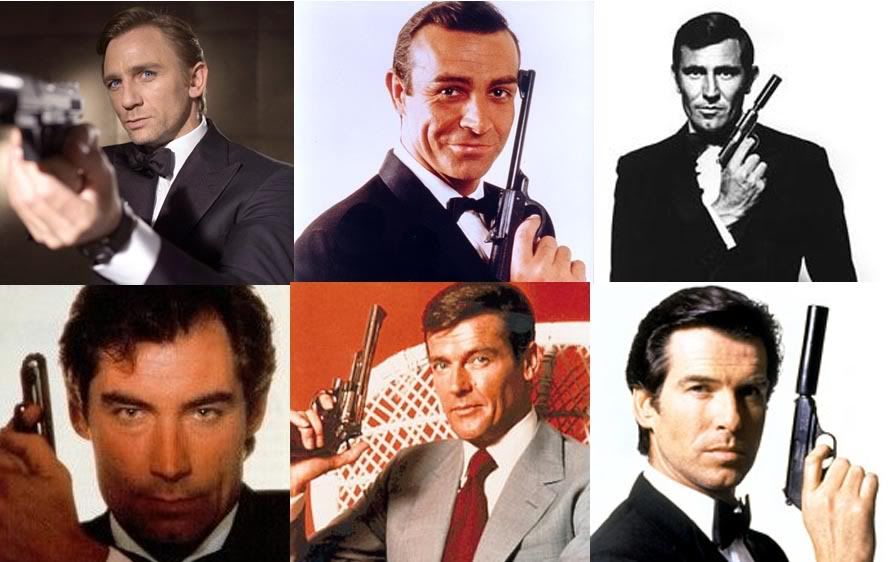
Bond Marathon
 We have an extensive film collection here at the Casa de Styx, and I have enjoyed showing them to my wife who was rightfully ignorant of much of the pop-culture ditchwater that I had immersed in for years.
 She's a trained classical musician and successful academic acolyte, so how would she have encountered "Ghost Busters" or "Big Trouble in Little China" (especially since she was a wee child when these movies came out, if that). Alas, we have covered every movie in my collection that she would enjoy without my making a hard hard sell. "The French Connection" and "Chinatown," for example, are great films but they are also violent and shocking and who really wants to see that stuff when you want to relax; a logical point - even if I don't follow it. I mean, I often force myself to watch films that I "should" see - just to increase my education. My free time to watch is quite limited, and my desire to be entertained is such, that I am now failing in my education and feeling more like my wife's point of view.
For example, I rented The Rules of the Game (1939) by Jean Renoir because it was the top rated foreign film of all time by nearly every film critic. It's unwatchable muck. Oh, I tried - black and white doesn't bother me and normally subtitles are fine - except that I usually sort piles of my papers while watching films and I can't do that in a heavy dialogue film. But here's the thing - it's not entertaining, interesting, or broadening. Compare it with other films from that year: The Wizard of Oz, Gone with the Wind, Mr. Smith Goes to Washington, Stagecoach, Wuthering Heights and Gunga Din.
I tried to watch the second highest rated foreign film: The Battleship Potemkin". For this stinkeroo there's not much year comparison (1925 was not a banner year) except for "The Gold Rush," by Chaplin (which I own). For those who don't know about the "Battleship" thingy - it's a communist propaganda film that has the intellectual and emotional depth of a political smear.
All that is to explain that I am not so high and mighty (much). But we still need to find something to watch while we're half-dead on the couch, watching our son tear his way through the furniture. That's when I decided to initiate the Bond Marathon.
As an earlier post explained, I have pain-stakingly sought and individually accumulated all 22 Bond special-edition DVDs. Twenty Bond films, plus Never Say Never Again, and Casino Royale. I have showed them all to my wife, but out of order. Now we get to see them from the beginning. Considering our pace, we should finish by the time the next Bond comes out.
P.S. The best thing about the marathon is that we recognize how much of a debonair superman my son is becoming. I have begun calling him "Doodle-O 7"
{2009 update: image from here}
Monday, December 01, 2003
Movie: Ronin (1998)

Seeing this movie, Ronin (1998), around the same time I saw City of Industry (1997) birthed one of my theories of enlightened movie-watching: the best movies of stars are (usually) not their best known.
De Niro is the best I've ever seen him in Ronin; Keitel in City of Industry. Not their best performances as actors (that's probably Raging Bull for De Niro and From Dusk Till Dawn - no joke - for Keitel). But their best as character actors; the personae that make them so compelling to watch.
Keitel is so Keitel in Industry; same with de Niro in Ronin. They carry the respective movies and make them tours de force of what makes them attractive.
Using this theory, here are the other action heroes and their best character roles. In rare cases, are the movies their biggest.
- Schwarzenegger = Predator
- Eastwood = The Outlaw Josey Wales
- Mel Gibson = Road Warrior
- Sean Connery = Zardoz (just kidding: Hunt for Red October) - [although this is a close second with the Untouchables]
- Burt Reynolds = Sharkey's Machine
- Paul Newman = Slap Shot
- Jack Nicholson = Chinatown
- Bruce Willis = Last Boy Scout
Wednesday, May 07, 2003
SARS - Terrorism & Totalitarianism
As my brother, the smarter twin, explained to me when the news broke out about SARS back during the Bush War Sequel, that China is to blame for the breakout and danger. When I gave a sermon over Pesach I touched on how we live in a world of terrorism and that every public catastrophe is assumed lichatchila to be terrorism. I brought as examples SARS and Michael Jordan's retirement.
However, the real reason SARS has spread is not terrorism but totalitarianism. China, being very very way oh man evil, suppressed information about the outbreak and denied help to its citizenry. Why? Because of the sicko psychology and sociology of totalitarian leadership. Somehow having a contagion roaming loose in your country is an embarrassing fact. We in the West will see China as a bunch of backward losers if they have a respiratory illness. Well, news to the Chinese: we already think you're losers because you are communists and you look like bigger losers when you do something this stupid.
It proves, yet again, that the worst scourge on humanity is low self-esteem. It led to Hitler. It led to SARS.
However, the real reason SARS has spread is not terrorism but totalitarianism. China, being very very way oh man evil, suppressed information about the outbreak and denied help to its citizenry. Why? Because of the sicko psychology and sociology of totalitarian leadership. Somehow having a contagion roaming loose in your country is an embarrassing fact. We in the West will see China as a bunch of backward losers if they have a respiratory illness. Well, news to the Chinese: we already think you're losers because you are communists and you look like bigger losers when you do something this stupid.
It proves, yet again, that the worst scourge on humanity is low self-esteem. It led to Hitler. It led to SARS.
Friday, May 15, 1998
Life in the Styx vol. 4, no. 40 (Old Styx)
Life in the Styx vol. 4, no. 40; May 15, 1998 (Excerpts):
FRANK SINATRA
Frank Sinatra, an American icon whose virtuoso talent and notorious public image made him a defining and dominant celebrity for more than five decades, died last night at age 82.
He was "The Chairman of the Board," "Old Blue Eyes," "Frankie," he did things His Way. There, I got the damned cliches out of the way quickly. His talent was too good to let the hacks and jackals of the press apply their pedestrian rot to his legacy.
I urge those of you who know of Sinatra as the opening song of "Married With Children" actually hear some of his music. Those who only know of his attitude from "My Way" to hear the majority of his work -- to know that popular music at one point had lyrics that carried a sober, wise pathos.
And the man could sing! He had a powerful limousine voice that never seemed to end -- he could probably hold a note longer and stronger than almost any singer who thought to be his rival.
And yes, he was the Chairman. His hep-cat, master of the cool years appeal to many across the generations. I am one of those who believe that "My Way" was written purely with me in mind.
While "My Way" does read as a perfect epitaph (first line: And now, the end is near;/ And so I face the final curtain") I prefer another song, possibly my private favorite, that combines his ballistic voice with the maturity and boldness that should be his legacy: "That's Life" [In the original Styx, I sent out the full lyrics]
THE LAST SEINFELD
I find it appropriate that just when the hype from the end of Seinfeld reached the level of farce, when people who classify "The Wedding Singer" as a nostalgia movie are both pining and cynically criticizing their emotions over a TV show that purports to be a classic, fate helps put things in perspective with the death of Sinatra. While Seinfeld may have been the Upper West Side, Frankie was New York.
And I can't help but think that Seinfeld would be grateful. It wasn't he who blew up the hype; it was both NBC who is looking down the barrel of a long painful reconstruction after losing both America's #1 show and pro-football.
It was also the collection of streetwalkers known as the American Press Corps who blew this out of proportion. Thursday morning, the day of the last show, one of the "top stories" on the Reuters wire was a very special scoop indeed. It seems that one of their investigative crack reporters picked up a leak as to the exact plot of the finale! So I read about the car-jacking and the trial 12 hours before it was shown -- serves me right for be a news-junkie, right?
Why was that story news? Why was it a "scoop"? We press-critics each have our high-water mark as to when we declare that the press has gone 'too far' -- some people think it's O.J., some waited until Monicalewinskygate. But in some ways I think this is a far worse sign. It shows that there is no longer any break between entertainment and news. It shows that the only ethics left to the reporters are: (1) a need to "scoop" and (2) a need to destroy privacy.
The only reason why the temptation to know the plot existed was because NBC tried to keep it a secret; and it seems like something so petty and trivial as that was enough to waste a "top story" (not like anything else was happening: nuclear crisis in India-Pakistan, hundreds of people killed in Indonesian riots; Arafat pushing for armed struggle in Israel etc.) See below for more journalistic-wickedness.
SEINFELD: THE PHENOMENON
Everyone should be sick unto death of reading analysis articles about Why Seinfeld Is So Popular. Then there are the counter articles -- probably by the same misanthropic cranks who felt a need to attack Titanic -- who tried to tear down the belief that there's something to miss with the passing of Seinfeld.
I read a column in Time Magazine, the Marvel Comics of news, that tried ever-so-vainly to convince the reader that Seinfeld was a used-diaper compared to the laudable librettos of "The Andy Griffith Show."
Thank the TV-gods for providing us with Nick at Nite so we can finally match up the cinematic gadlus of the bygone era with ours. Folks, I don't want to surprise you, but early TV sucked. If I had only "Andy Griffith" to watch I'd drink Drano.
But here's a surprise: comedy is a cultural bench-mark. Material is only found to be funny by the intended audience. And it is ooo-kaaay to have different tastes within the genre. But I guess reporters are just two-speed bicycles that can only trash or hype.
SEINFELD'S APPEAL
Of course, I do need to give my two-cents on why Seinfeld was so popular. That is the most interesting question anyway. Especially since the show had a strong amorality that was part of its unavoidable message (something that came to haunt them in the distinctly unfunny finale) and why I couldn't be a regular viewer.
The trick here is to realize that people weren't watching it for the amorality, even though it became an unintended side-effect. This is how the marketplace works: you buy a product because it's the best available, not the best there is; there may be aspects you don't like about your chosen purchase, but they aren't significant enough to dissuade your acquisition.
However, the sub-standards still exist and will affect you. Seinfeld did manage, in my analysis, to debase the discourse on television towards a more tawdry and even raunchy level. Because of the show's power and appeal, they were able to broadcast an episode about masturbation -- a plot-line that I believe is the quintessence of the show -- which would not have been possible had Seinfeld not been so popular. And once you break that barrier of propriety, it's very difficult to go back.
This psycho-social phenomenon can be summed up with this aphorism: there aren't always moral reasons but there are moral consequences. The amorality wasn't why The People watched, but it did affect The People afterwards.
So why did they watch? Very simple: the principle of the show wasn't that it was "about nothing" (a phrase repeated so often that I had a standing threat to pole-axe the next person who said it within ear-shot). The other phrase Seinfeld had for it was: "no hugging, no learning."
All one has to do is compare Seinfeld to the other two comedies that went belly-up this week: "Ellen" and "Murphy Brown." Ellen became a one-trick pinto. It was gay gay gay and I'm not sure if *any* one note show could survive, let alone one with such a moralizing tincture. Murphy Brown was moribund for years and it needed to jolt itself alive with dramatic plot grafts (a baby! a cancer!)
Seinfeld was one place you could go where it was 100% jokes. Once you were over the hurdle of accepting the basic characters & premise, you were guaranteed non-stop payback. And that, very simply, is why it was so popular.
ISRAEL
One message about Israel. This is probably the only instance that I remember where the New York Times, good ol' German Serge Schmemann, was more anti-Israel than even the Reuters wire. Reuters placed the Israeli backlash to the current Palestinian riots by saying, straight out, that the Israelis only fired into the mob when (a) they were fired on first! or (b) when they were about to be over-run. Reuters also claimed that in some areas the Palestinian police were doing little to stop the violence. I didn't save the Reuters story, but here's the AP: [May 14, 1998, 4:41 p.m.]
While most of the marchers -- 1 million by official Palestinian
estimates -- were peaceful, thousands of young men broke away and
headed toward Israeli army outposts. In clash after clash, they
hurled stones at Israeli soldiers who responded with tear gas,
rubber bullets and, sometimes, live rounds.
[...]
Brig. Gen. Yoav Galant, the Israeli commander in Gaza, accused
Arafat's government of deliberately organizing demonstrations so
large as to be uncontrollable. Galant also said Palestinian police
and civilians fired wildly in at least one confrontation, and may
have been responsible for some casualties.
Israeli officials recovered about 200 casings of the type of
bullets used by Palestinian police, he said. Israeli troops also
displayed two armored vehicles that had been shot.
The Times, however, paints the picture like it was a mad orgiastic Klan-like attack by the Israeli army against innocents. See the picture on page A11 (Fri, May 15 1998) to see a pure example of how newspapers can gush falsehood under the guise of news. Disgusting and despicable.
KENNETH STARR
As of last looking, Kenneth Starr is chomping at the bit, trying to break the government stonewall over the Secret Service silence. Besides the obvious lesson that a Secret Service, by definition, is secret, there's the head of the service saying that forcing the agents to testify would lead to the death of a president.
OK, granted, it sounds like the chief is freaking out, but I'd far more trust his opinion on these matters than Starr who, by all accounts -- probably even the psychotic Rep. Dan Burton agrees -- has *got* to have his priorities straightened out!
Kenneth! (I'm sure he hates 'Ken') Dude! It's just not worth it! Somebody better tackle Starr and hose him down with some PERSPECTIVE. Maybe the secret service, they do that for a living ya know.
A NUCLEAR INDIA
This is bad. We do not need to have India, Pakistan, China, and North Korea in a shoving match. But my grasp of geopolitics doesn't merit a column on this topic. I do want to point out a twinge-ing moral inconsistency by, your friend and mine, the New York Times.
Their Thursday (5-15-98) editorial claimed that the CIA failed because they didn't know about the nuclear tests beforehand. Maybe it's me, but all this complaining can be answered by a simple question -- why didn't we just pay an Indian citizen in their Navy intelligence division to give us information? This hypothetical person, we'll call him Mahatma Pollard, could have been an American hero, right? Right?
Have a good Shabbas.
FRANK SINATRA
Frank Sinatra, an American icon whose virtuoso talent and notorious public image made him a defining and dominant celebrity for more than five decades, died last night at age 82.
He was "The Chairman of the Board," "Old Blue Eyes," "Frankie," he did things His Way. There, I got the damned cliches out of the way quickly. His talent was too good to let the hacks and jackals of the press apply their pedestrian rot to his legacy.
I urge those of you who know of Sinatra as the opening song of "Married With Children" actually hear some of his music. Those who only know of his attitude from "My Way" to hear the majority of his work -- to know that popular music at one point had lyrics that carried a sober, wise pathos.
And the man could sing! He had a powerful limousine voice that never seemed to end -- he could probably hold a note longer and stronger than almost any singer who thought to be his rival.
And yes, he was the Chairman. His hep-cat, master of the cool years appeal to many across the generations. I am one of those who believe that "My Way" was written purely with me in mind.
While "My Way" does read as a perfect epitaph (first line: And now, the end is near;/ And so I face the final curtain") I prefer another song, possibly my private favorite, that combines his ballistic voice with the maturity and boldness that should be his legacy: "That's Life" [In the original Styx, I sent out the full lyrics]
THE LAST SEINFELD
I find it appropriate that just when the hype from the end of Seinfeld reached the level of farce, when people who classify "The Wedding Singer" as a nostalgia movie are both pining and cynically criticizing their emotions over a TV show that purports to be a classic, fate helps put things in perspective with the death of Sinatra. While Seinfeld may have been the Upper West Side, Frankie was New York.
And I can't help but think that Seinfeld would be grateful. It wasn't he who blew up the hype; it was both NBC who is looking down the barrel of a long painful reconstruction after losing both America's #1 show and pro-football.
It was also the collection of streetwalkers known as the American Press Corps who blew this out of proportion. Thursday morning, the day of the last show, one of the "top stories" on the Reuters wire was a very special scoop indeed. It seems that one of their investigative crack reporters picked up a leak as to the exact plot of the finale! So I read about the car-jacking and the trial 12 hours before it was shown -- serves me right for be a news-junkie, right?
Why was that story news? Why was it a "scoop"? We press-critics each have our high-water mark as to when we declare that the press has gone 'too far' -- some people think it's O.J., some waited until Monicalewinskygate. But in some ways I think this is a far worse sign. It shows that there is no longer any break between entertainment and news. It shows that the only ethics left to the reporters are: (1) a need to "scoop" and (2) a need to destroy privacy.
The only reason why the temptation to know the plot existed was because NBC tried to keep it a secret; and it seems like something so petty and trivial as that was enough to waste a "top story" (not like anything else was happening: nuclear crisis in India-Pakistan, hundreds of people killed in Indonesian riots; Arafat pushing for armed struggle in Israel etc.) See below for more journalistic-wickedness.
SEINFELD: THE PHENOMENON
Everyone should be sick unto death of reading analysis articles about Why Seinfeld Is So Popular. Then there are the counter articles -- probably by the same misanthropic cranks who felt a need to attack Titanic -- who tried to tear down the belief that there's something to miss with the passing of Seinfeld.
I read a column in Time Magazine, the Marvel Comics of news, that tried ever-so-vainly to convince the reader that Seinfeld was a used-diaper compared to the laudable librettos of "The Andy Griffith Show."
Thank the TV-gods for providing us with Nick at Nite so we can finally match up the cinematic gadlus of the bygone era with ours. Folks, I don't want to surprise you, but early TV sucked. If I had only "Andy Griffith" to watch I'd drink Drano.
But here's a surprise: comedy is a cultural bench-mark. Material is only found to be funny by the intended audience. And it is ooo-kaaay to have different tastes within the genre. But I guess reporters are just two-speed bicycles that can only trash or hype.
SEINFELD'S APPEAL
Of course, I do need to give my two-cents on why Seinfeld was so popular. That is the most interesting question anyway. Especially since the show had a strong amorality that was part of its unavoidable message (something that came to haunt them in the distinctly unfunny finale) and why I couldn't be a regular viewer.
The trick here is to realize that people weren't watching it for the amorality, even though it became an unintended side-effect. This is how the marketplace works: you buy a product because it's the best available, not the best there is; there may be aspects you don't like about your chosen purchase, but they aren't significant enough to dissuade your acquisition.
However, the sub-standards still exist and will affect you. Seinfeld did manage, in my analysis, to debase the discourse on television towards a more tawdry and even raunchy level. Because of the show's power and appeal, they were able to broadcast an episode about masturbation -- a plot-line that I believe is the quintessence of the show -- which would not have been possible had Seinfeld not been so popular. And once you break that barrier of propriety, it's very difficult to go back.
This psycho-social phenomenon can be summed up with this aphorism: there aren't always moral reasons but there are moral consequences. The amorality wasn't why The People watched, but it did affect The People afterwards.
So why did they watch? Very simple: the principle of the show wasn't that it was "about nothing" (a phrase repeated so often that I had a standing threat to pole-axe the next person who said it within ear-shot). The other phrase Seinfeld had for it was: "no hugging, no learning."
All one has to do is compare Seinfeld to the other two comedies that went belly-up this week: "Ellen" and "Murphy Brown." Ellen became a one-trick pinto. It was gay gay gay and I'm not sure if *any* one note show could survive, let alone one with such a moralizing tincture. Murphy Brown was moribund for years and it needed to jolt itself alive with dramatic plot grafts (a baby! a cancer!)
Seinfeld was one place you could go where it was 100% jokes. Once you were over the hurdle of accepting the basic characters & premise, you were guaranteed non-stop payback. And that, very simply, is why it was so popular.
ISRAEL
One message about Israel. This is probably the only instance that I remember where the New York Times, good ol' German Serge Schmemann, was more anti-Israel than even the Reuters wire. Reuters placed the Israeli backlash to the current Palestinian riots by saying, straight out, that the Israelis only fired into the mob when (a) they were fired on first! or (b) when they were about to be over-run. Reuters also claimed that in some areas the Palestinian police were doing little to stop the violence. I didn't save the Reuters story, but here's the AP: [May 14, 1998, 4:41 p.m.]
While most of the marchers -- 1 million by official Palestinian
estimates -- were peaceful, thousands of young men broke away and
headed toward Israeli army outposts. In clash after clash, they
hurled stones at Israeli soldiers who responded with tear gas,
rubber bullets and, sometimes, live rounds.
[...]
Brig. Gen. Yoav Galant, the Israeli commander in Gaza, accused
Arafat's government of deliberately organizing demonstrations so
large as to be uncontrollable. Galant also said Palestinian police
and civilians fired wildly in at least one confrontation, and may
have been responsible for some casualties.
Israeli officials recovered about 200 casings of the type of
bullets used by Palestinian police, he said. Israeli troops also
displayed two armored vehicles that had been shot.
The Times, however, paints the picture like it was a mad orgiastic Klan-like attack by the Israeli army against innocents. See the picture on page A11 (Fri, May 15 1998) to see a pure example of how newspapers can gush falsehood under the guise of news. Disgusting and despicable.
KENNETH STARR
As of last looking, Kenneth Starr is chomping at the bit, trying to break the government stonewall over the Secret Service silence. Besides the obvious lesson that a Secret Service, by definition, is secret, there's the head of the service saying that forcing the agents to testify would lead to the death of a president.
OK, granted, it sounds like the chief is freaking out, but I'd far more trust his opinion on these matters than Starr who, by all accounts -- probably even the psychotic Rep. Dan Burton agrees -- has *got* to have his priorities straightened out!
Kenneth! (I'm sure he hates 'Ken') Dude! It's just not worth it! Somebody better tackle Starr and hose him down with some PERSPECTIVE. Maybe the secret service, they do that for a living ya know.
A NUCLEAR INDIA
This is bad. We do not need to have India, Pakistan, China, and North Korea in a shoving match. But my grasp of geopolitics doesn't merit a column on this topic. I do want to point out a twinge-ing moral inconsistency by, your friend and mine, the New York Times.
Their Thursday (5-15-98) editorial claimed that the CIA failed because they didn't know about the nuclear tests beforehand. Maybe it's me, but all this complaining can be answered by a simple question -- why didn't we just pay an Indian citizen in their Navy intelligence division to give us information? This hypothetical person, we'll call him Mahatma Pollard, could have been an American hero, right? Right?
Have a good Shabbas.
Subscribe to:
Posts (Atom)